
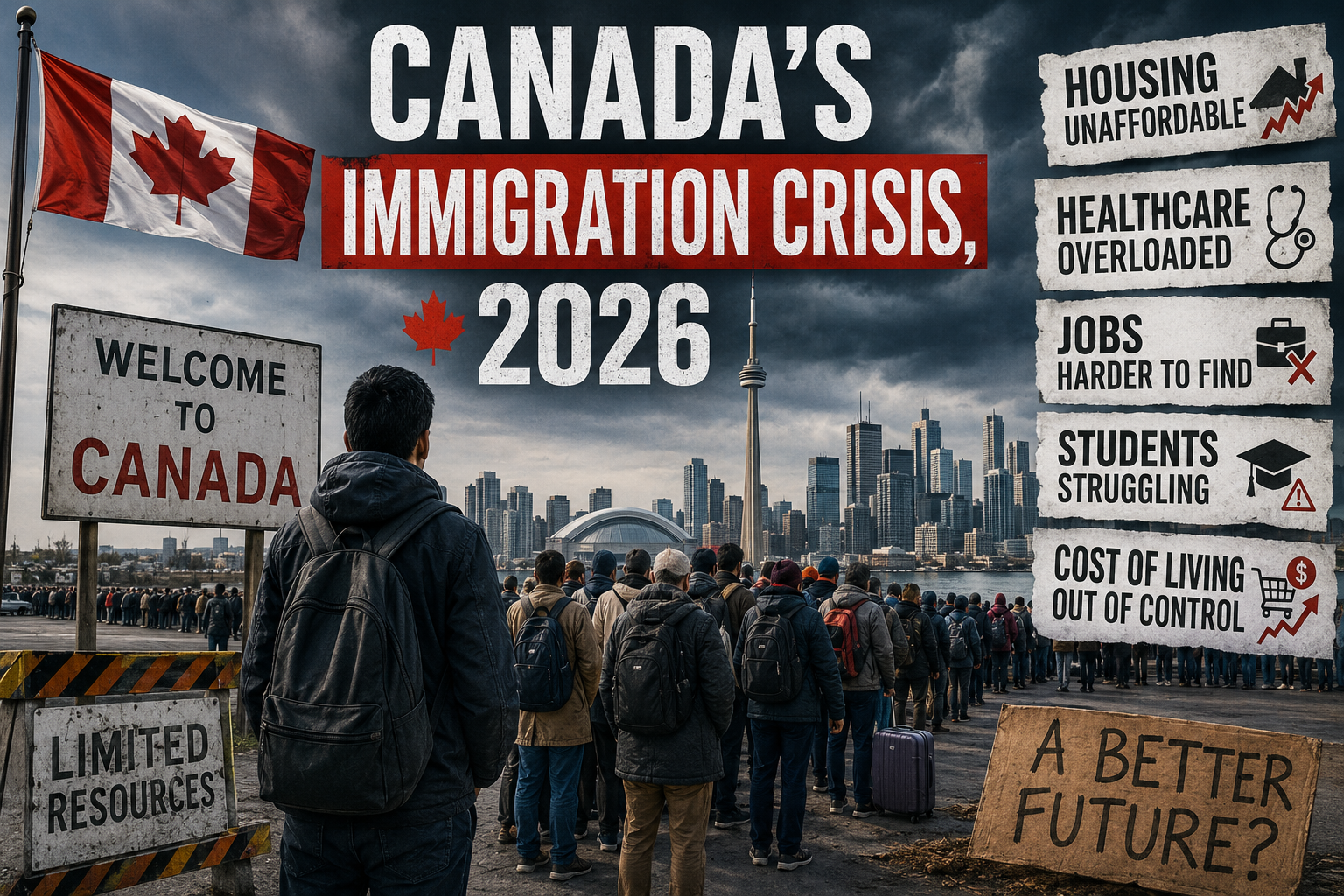
For decades, Canada was viewed as one of the most stable and welcoming countries in the world. Millions of immigrants dreamed of moving to Canada for better jobs, safer communities, free healthcare, and a stronger future for their families. The country built its international reputation on multiculturalism, immigration, and economic opportunity.
But in 2026, a growing number of Canadians are beginning to ask a difficult question:
Is Canada falling apart?
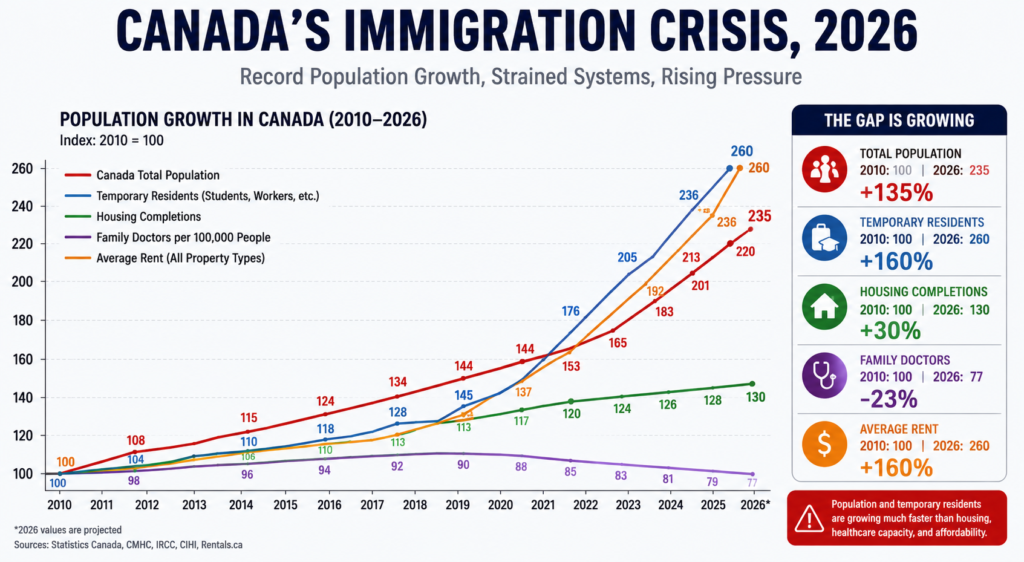
Across the country, people are struggling with rising rent, expensive groceries, long healthcare wait times, and growing uncertainty about the future. Immigration has become one of the most debated topics in Canada, especially as the population continues to grow rapidly while housing construction struggles to keep up.
Some Canadians believe immigration is helping Canada survive economically. Others argue the system has become unsustainable and poorly managed.
The truth is more complicated.
Canada is not collapsing overnight. However, the country is going through one of the biggest economic and social transitions in modern Canadian history. Immigration is now at the center of the national conversation.
Why Immigration Became Such a Huge Issue in Canada
Canada has always relied heavily on immigration.
The country has one of the lowest birth rates among developed nations, and without immigration, Canada’s population growth would slow dramatically. Immigrants help fill labour shortages, support the economy, and contribute billions in taxes.
However, the scale of immigration increased rapidly after the pandemic.
Canada welcomed:
- Permanent residents
- International students
- Temporary foreign workers
- Refugee claimants
- Open work permit holders
- Family sponsorship applicants
In just a few years, Canada’s population growth became one of the fastest in the developed world.
Many economists supported the idea initially because businesses needed workers after COVID-19 disruptions. But infrastructure growth did not keep pace.
This created pressure in several areas:
| Issue | Impact |
|---|---|
| Housing shortages | Higher rents and home prices |
| Healthcare delays | Longer wait times |
| Transit crowding | Overloaded public systems |
| Job competition | Entry-level wage pressure |
| Education strain | Colleges overwhelmed |
| Cost of living | Increased monthly expenses |
As daily life became more expensive, frustration started growing among Canadians.
You May Also Like: Fastest Provinces for PR in Canada Right Now (2026 Complete Guide)
The Housing Crisis: Canada’s Biggest Problem
When people ask whether Canada is “falling apart,” housing is usually the first reason mentioned.
Home ownership has become increasingly difficult for younger Canadians and newcomers alike.
In cities like:
- Toronto
- Vancouver
- Calgary
- Ottawa
Average rent prices have risen dramatically over the past few years.
Many students now share rooms with multiple people just to afford rent. Families are moving farther away from city centers because housing costs have become impossible for average earners.
Critics argue that Canada increased immigration targets without building enough homes first.
This imbalance created massive demand while supply remained limited.
The federal government has announced new housing plans and infrastructure funding, but construction takes years. Meanwhile, population growth continues rapidly.
International Students Under Pressure
International students once viewed Canada as a guaranteed pathway to permanent residency and a successful future.
But in 2025 and 2026, many students began facing serious challenges:
- Extremely high tuition fees
- Expensive rent
- Difficulty finding jobs
- Changes to immigration rules
- Increased PR competition
- Fraud concerns involving private colleges
Some newcomers arrived expecting opportunity but instead encountered financial stress and uncertainty.
The Canadian government later introduced stricter rules for international student permits and cracked down on questionable colleges.
This shift surprised many people because Canada had aggressively marketed itself internationally as an immigrant-friendly destination for years.
Now, immigration policies are becoming tighter.
Why Some Canadians Are Angry About Immigration
Many Canadians are not against immigration itself.
Instead, they are frustrated with how immigration growth has been managed.
Common concerns include:
1. Housing Affordability
People believe housing prices increased faster because demand exploded while supply stayed limited.
2. Wage Pressure
Some workers feel wages have not kept up with inflation, especially in entry-level industries.
3. Healthcare System Strain
Emergency rooms and family doctor shortages have become major issues across several provinces.
4. Infrastructure Overload
Roads, transit systems, and schools are struggling in high-growth regions.
5. Immigration Backlogs
Processing delays and changing immigration rules created confusion for applicants.
This frustration has led to political debates across Canada.
But Immigration Is Also Keeping Canada Alive
Despite criticism, many economists argue Canada still desperately needs immigration.
Without newcomers:
- Labour shortages would worsen
- Tax revenues could decline
- Population aging would accelerate
- Businesses would struggle to hire workers
- Economic growth could slow significantly
Canada’s healthcare system, construction industry, trucking sector, food services, and technology industries all rely heavily on immigrant workers.
Many immigrants also create businesses, generate employment, and contribute to local communities.
The challenge is not necessarily immigration itself.
The real issue may be whether Canada expanded population growth too quickly without properly preparing infrastructure and housing.
Is Canada’s Economy Getting Worse?
Canada’s economy is facing several pressures simultaneously.
These include:
| Economic Pressure | Effect |
|---|---|
| High interest rates | Expensive mortgages |
| Inflation | Rising grocery and utility costs |
| Housing crisis | Reduced affordability |
| Slower job market | Hiring uncertainty |
| Global instability | Economic volatility |
Many Canadians now feel financially weaker than they did five years ago.
Young adults especially are questioning whether they will ever be able to buy homes.
At the same time, newcomers arriving in Canada are discovering that living costs are much higher than expected.
This has created disappointment for some immigrants who believed Canada still offered the same opportunities it once did.
Social Media Is Making Fear Worse
Another reason people believe Canada is “falling apart” is because social media amplifies negative stories constantly.
Online platforms are filled with videos about:
- Homelessness
- Rising crime
- Food bank usage
- Immigration frustrations
- Housing struggles
- Economic anxiety
While many of these concerns are real, social media can sometimes create the impression that the entire country is collapsing.
In reality, Canada still ranks highly globally for:
- Quality of life
- Education
- Safety
- Human rights
- Healthcare access
- Economic stability
However, public confidence has clearly weakened.
Crime and Public Safety Concerns
Some Canadians feel crime has increased in major cities.
News coverage involving:
- Auto thefts
- Retail theft
- Drug addiction
- Violent incidents
- Homeless encampments
has fueled public anxiety.
However, experts note that crime trends vary significantly depending on the region.
Canada remains safer than many countries globally, but visible social disorder has become more noticeable in some urban centers.
This contributes to the broader feeling that systems are under pressure.
You May Also Like: New TR to PR Update in Canada 2026:...
Why Immigration Rules Are Changing in 2026
The Canadian government has started adjusting immigration policies in response to public pressure.
Recent changes include:
- Reducing some temporary resident targets
- Tightening international student regulations
- Increasing scrutiny on colleges
- Reviewing work permit programs
- Modifying permanent residency pathways
The government appears to be trying to balance:
- Economic needs
- Public frustration
- Housing shortages
- Infrastructure limitations
This balancing act is extremely difficult.
Canada still needs immigrants, but public support for high immigration levels has weakened compared to previous years.
What Immigrants Are Saying About Canada
Interestingly, many immigrants themselves are now criticizing Canada’s current situation.
Some newcomers report:
- Lower quality of life than expected
- High debt levels
- Difficulty finding professional jobs
- Mental health stress
- Expensive childcare
- Long PR processing times
At the same time, others still believe Canada offers better opportunities than their home countries.
Experiences vary dramatically depending on:
- Province
- Career field
- Income level
- Immigration pathway
- Family support system
Canada remains attractive for many people globally, but expectations are changing.
Smaller Provinces Are Becoming More Popular
Because major cities became so expensive, many newcomers are now considering smaller provinces and communities.
Places like:
- New Brunswick
- Nova Scotia
- Saskatchewan
- Manitoba
have seen increased immigration interest.
These areas often offer:
- Lower housing costs
- Provincial immigration programs
- Smaller communities
- Labour shortages
- Better affordability
Provincial Nominee Programs (PNPs) continue playing a major role in distributing immigration outside major cities.
Are Canadians Losing Faith in the Government?
A growing number of Canadians believe governments failed to prepare properly for rapid population growth.
Critics argue authorities should have:
- Built more housing earlier
- Expanded healthcare staffing faster
- Improved infrastructure planning
- Controlled temporary resident growth more carefully
Supporters of current policies argue global inflation and post-pandemic disruptions also contributed heavily to Canada’s challenges.
The debate has become increasingly political.
Immigration is no longer viewed only as an economic topic. It is now connected to affordability, healthcare, jobs, and national identity.
Is Canada Still a Good Country for Immigrants?
Despite current struggles, many people still see Canada as one of the best countries in the world for immigration.
Canada continues offering:
- Strong legal protections
- Relatively high wages
- Permanent residency opportunities
- Citizenship pathways
- Multicultural communities
- Educational opportunities
However, success in Canada today requires more planning than before.
Newcomers increasingly need:
- Strong financial preparation
- Realistic expectations
- In-demand skills
- Careful city selection
- Long-term planning
The “easy Canada dream” many people imagined online is becoming less realistic.
The Future of Immigration in Canada
Canada’s immigration system will likely continue evolving over the next few years.
Experts expect:
| Future Trend | Likely Direction |
|---|---|
| Student permits | Stricter |
| Housing-linked immigration planning | Increased |
| Skilled worker targeting | More selective |
| Temporary resident limits | More controlled |
| Provincial immigration programs | Expanded |
| Healthcare worker recruitment | Increased |
The country is trying to find a sustainable balance.
Completely stopping immigration is unrealistic because Canada’s economy depends heavily on newcomers.
But maintaining extremely high population growth without solving housing and infrastructure issues may create further public backlash.
So, Is Canada Really Falling Apart?
The answer depends on perspective.
Canada is not collapsing as a nation. It remains one of the wealthiest and safest countries globally.
However, several systems are clearly under strain:
- Housing
- Healthcare
- Affordability
- Immigration processing
- Infrastructure
Many Canadians feel frustrated because life has become significantly more expensive and uncertain.
Immigration became the symbol of these frustrations because population growth happened so quickly.
At the same time, immigrants continue helping Canada economically and socially in major ways.
The real issue may not be immigration itself.
The deeper problem is whether Canada’s infrastructure, housing policies, and economic planning kept pace with population growth.
You May Also Like: New Canada Permanent Residence Fees Increase Effective April 30, 2026: Full Breakdown
Final Thoughts
Canada is going through a difficult transition period.
The country is attempting to balance economic growth, humanitarian responsibilities, labour shortages, and public affordability concerns all at once.
This creates tension.
Some people believe Canada is losing its identity and stability. Others believe the country is simply adapting to modern global realities.
What happens next will depend heavily on:
- Housing construction
- Economic recovery
- Immigration reform
- Government planning
- Public trust
Canada still has enormous strengths, but the challenges facing the country in 2026 are impossible to ignore.
The debate surrounding immigration is no longer just about newcomers.
It is now about the future direction of Canada itself.
Discover more from CanadianUpdates
Subscribe to get the latest posts sent to your email.