
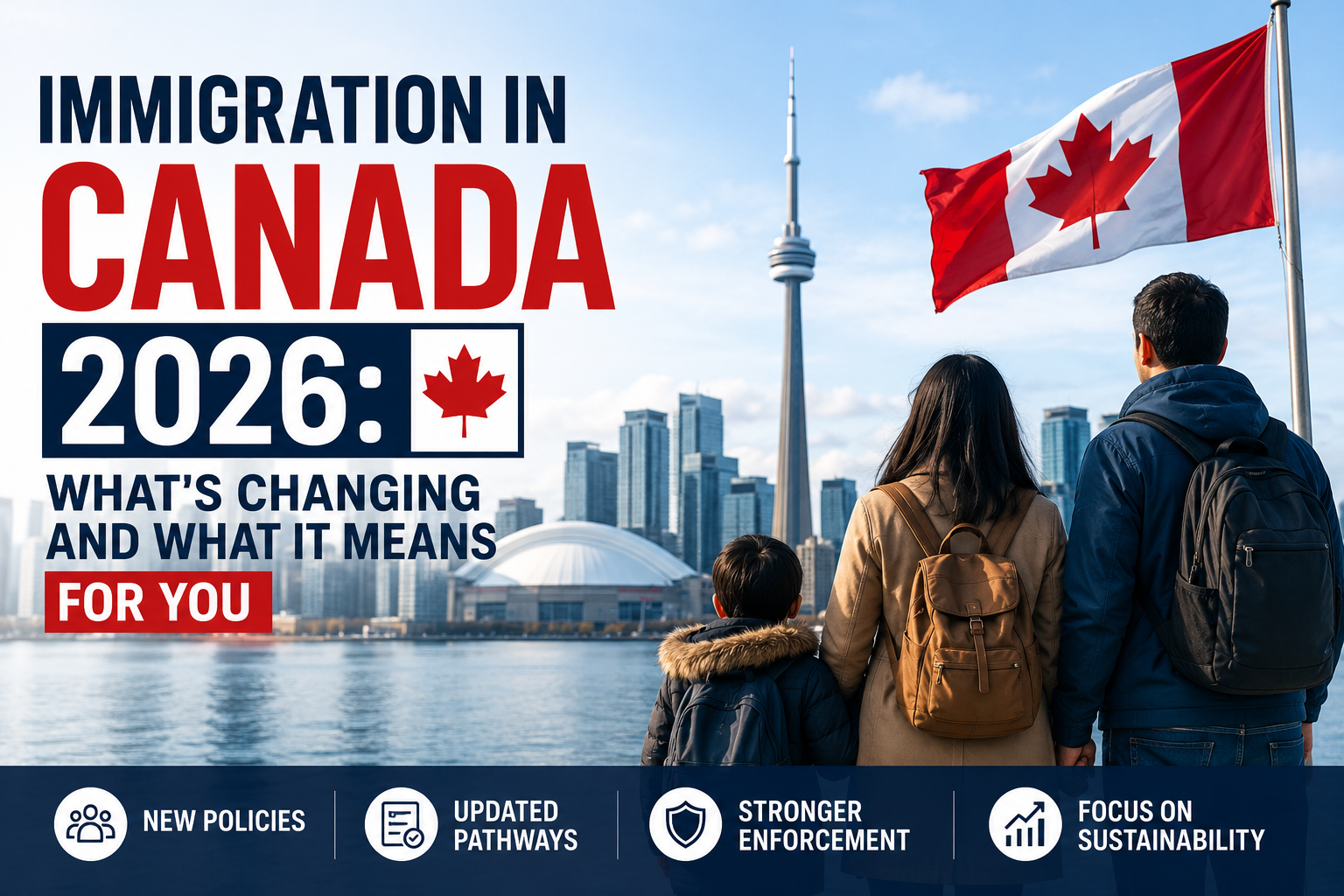
Canada has long been one of the most sought-after destinations for immigrants worldwide. With its strong economy, universal healthcare, multicultural society, and high standard of living, the country continues to attract hundreds of thousands of newcomers every year. But the landscape of Canadian immigration is shifting. In 2026, the federal government is implementing some of the most significant policy changes in decades — tightening temporary resident volumes, modernizing digital processes, and recalibrating what “sustainable immigration” really means.
Whether you’re planning to move to Canada, already in the process, or simply curious about where things are headed, this guide breaks down everything you need to know.
Why Canada Welcomes Immigrants
Before diving into the changes, it’s worth understanding why Canada actively recruits immigrants in the first place.
Canada is an aging nation. Its birth rate has been declining for years, and without consistent immigration, the workforce would shrink, public services would be underfunded, and the economy would stagnate. Immigration isn’t just a social policy — it’s an economic necessity.
Beyond economics, Canada was built by immigrants. From French and British settlers to waves of European, Asian, Caribbean, and African newcomers, the country’s identity is rooted in diversity. That multicultural foundation has shaped everything from its cities to its legal protections, making Canada uniquely positioned to integrate newcomers effectively.
The country operates under a points-based immigration system that prioritizes skilled workers, French-language proficiency, Canadian work experience, and family ties — all factors that help newcomers integrate and contribute quickly.
The 2026–2028 Immigration Levels Plan
The Government of Canada recently released its 2026–2028 Immigration Levels Plan, which outlines a significant change in direction from the high-intake years that defined the early 2020s.
The plan signals a deliberate move toward sustainable immigration — prioritizing quality of integration over quantity of arrivals. The government has committed to reducing Canada’s temporary resident population to less than 5% of the total population by the end of 2027. Targets for new temporary resident arrivals are set at 385,000 in 2026, dropping to 370,000 in both 2027 and 2028.
This is a notable pullback. In previous years, Canada was welcoming upward of 500,000 permanent residents annually, with temporary residents adding hundreds of thousands more on top. The new plan reflects growing pressure around housing costs, healthcare system strain, and the need for smoother integration pathways.
Permanent resident admissions, however, are being stabilized rather than cut — with the government reaffirming its commitment to economic immigration, family reunification, and humanitarian cases.
Key Immigration Pathways in 2026
Express Entry
Express Entry remains Canada’s flagship program for skilled workers seeking permanent residency. It manages three main streams: the Federal Skilled Worker Program, the Federal Skilled Trades Program, and the Canadian Experience Class.
Candidates are ranked using the Comprehensive Ranking System (CRS), which awards points for age, education, language skills, Canadian work experience, and job offers. The highest-ranked candidates receive Invitations to Apply (ITAs) during regular draws. In 2026, draws have increasingly targeted specific occupations — particularly in healthcare, trades, and STEM fields — reflecting the government’s focus on filling critical labour gaps.
Provincial Nominee Programs (PNPs)
Each Canadian province and territory runs its own immigration streams tailored to local labour needs. Ontario, British Columbia, Alberta, and Saskatchewan are among the most active. PNPs can significantly boost a candidate’s CRS score with a provincial nomination worth 600 additional points — essentially guaranteeing an ITA.
In April 2026, Saskatchewan extended its application fee structure and tightened eligibility criteria for certain worker streams, reflecting a broader trend of provinces becoming more selective.
Temporary Foreign Worker Program and International Mobility Program
Temporary workers continue to play an important role in Canada’s economy, particularly in agriculture, food processing, hospitality, and construction. However, the 2026 plan introduces stricter employer oversight. Compliance inspections are being transferred to Employment and Social Development Canada (ESDC), signalling greater accountability for employers who rely on temporary foreign workers.
For rural employers specifically, a new provision allows them to hire up to 15% of their workforce as low-wage temporary foreign workers (up from the previous 10% cap), giving small communities in provinces like Manitoba and New Brunswick more flexibility to address labour shortages.
Study Permits and International Students
Canada has historically been one of the top destinations for international students. However, the 2026 levels plan includes a continued reduction in study permit approvals. The government is responding to concerns that the international student pathway has been misused by some institutions and exploited by unethical immigration consultants.
Post-Graduation Work Permit (PGWP) eligibility rules have also been tightened, with stricter requirements around program duration, institutional accreditation, and language proficiency. Students considering Canada should now be more selective about which institution and program they choose, as not all will lead to a work permit.
New Enforcement and Deportation Policies
One of the more discussed changes in 2026 involves updated immigration tribunal procedures. Revised appeal rules may allow certain foreign nationals facing deportation to seek additional legal review before removal. Critics argue this could delay enforcement; supporters say it strengthens due process and ensures fair hearings.
The broader message from the government is clear: legal immigration pathways remain open and well-supported, but irregular entry and non-compliance will be met with stronger enforcement tools and faster processing of removal orders.
Digital Modernization of IRCC
The Immigration, Refugees and Citizenship Canada (IRCC) department is undergoing a major digital transformation. The 2026–27 Departmental Plan outlines significant investment in online application systems, faster processing timelines, and improved client portals.
For applicants, this means a more streamlined experience — less paper, fewer in-person requirements, and better visibility into application status. For employers, updated digital compliance tools will make it easier to meet obligations under work permit programs.
This modernization is overdue. Long processing times have been one of the biggest pain points for immigrants in recent years. The IRCC’s backlog hit crisis levels during and after the pandemic, and the new digital investments are aimed at preventing a repeat.
Immigration and the Housing Crisis
No conversation about Canadian immigration in 2026 is complete without addressing housing. Canada is in the middle of a serious affordability crisis — home prices in cities like Toronto and Vancouver remain among the highest in the world, and rental vacancies are at historic lows.
Critics have pointed to high immigration levels as a contributing factor, arguing that demand for housing outpaces construction. The government has acknowledged the relationship, which is partly why temporary resident volumes are being reduced. However, economists broadly agree that the housing crisis is primarily a supply problem, driven by restrictive zoning, slow construction, and underinvestment in infrastructure — not immigration itself.
Many immigrants also work directly in construction and trades, meaning restricting immigration too sharply could paradoxically worsen the supply problem. It’s a nuanced policy challenge with no easy answer.
Immigration for American Citizens in 2026
An interesting development this year is Canada’s introduction of streamlined pathways for U.S. citizens. With ongoing economic uncertainty and political polarization south of the border, interest among Americans in relocating to Canada has surged.
New simplified work permits and family sponsorship processes are making the transition easier for Americans who qualify. Basic requirements still apply — identity verification, security and medical checks, and eligibility under a recognized program — but the administrative experience has been made smoother.
What This All Means for Prospective Immigrants
If you’re thinking about immigrating to Canada, the message from 2026’s policy landscape is nuanced. The door isn’t closed — it’s being recalibrated.
Permanent residency pathways remain strong, especially for skilled workers, healthcare professionals, tradespeople, and French speakers. Family reunification continues to be a priority. And Canada’s humanitarian commitments to refugees and protected persons remain intact.
What’s tightening is the temporary resident side: study permits, low-skill work permits, and open work authorizations. If your plan was to enter Canada as a temporary resident and eventually transition to permanent residency, expect longer timelines and stricter requirements.
The key takeaway? Plan early, choose your pathway carefully, and work with a regulated immigration consultant or lawyer. The landscape is more complex than it was five years ago, but Canada remains one of the most immigrant-friendly countries in the world.
Final Thoughts
Canada’s immigration story in 2026 is one of adjustment, not retreat. After years of record intake, the country is pausing to ask how it can better support the people who are already here while continuing to welcome those who can contribute to its future.
The fundamentals haven’t changed. Canada needs immigrants. Its economy depends on them, its communities are enriched by them, and its identity is inseparable from the global diversity they bring. What’s changing is the approach — a more targeted, better-managed, and digitally modernized system that aims to make immigration work better for everyone.
For those with their eyes on Canada, the opportunity is still very much alive. It just requires a little more planning than it used to.
Have questions about immigrating to Canada? Drop them in the comments below — we’d love to help guide you through the process.
Discover more from CanadianUpdates
Subscribe to get the latest posts sent to your email.