
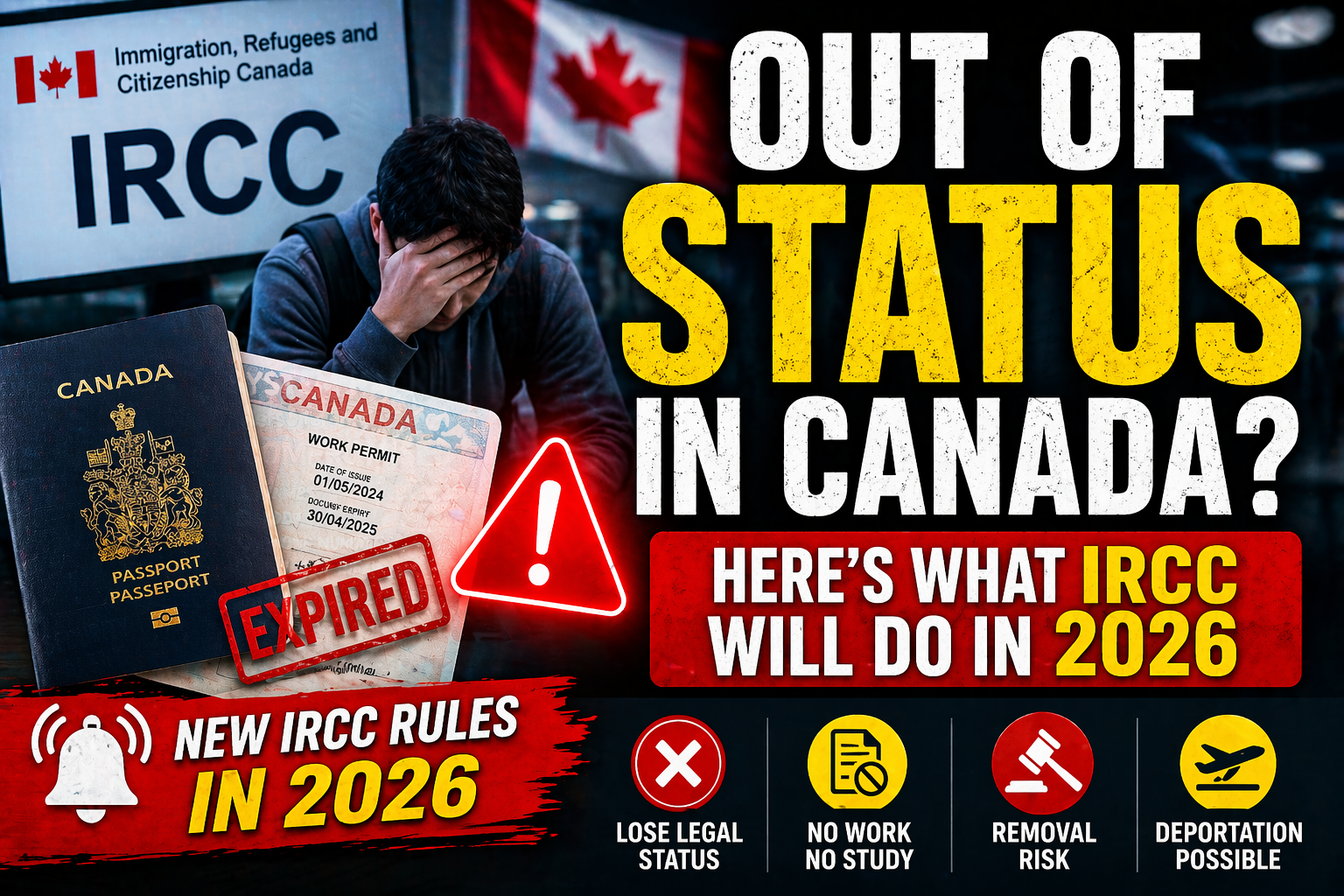
If your work permit, study permit, or visitor visa has expired, you may now be facing one of the most serious immigration situations in Canada:
Being out of status in Canada
In 2026, this issue is growing rapidly due to:
- Over 1 million permits expiring
- Stricter IRCC enforcement
- Fewer second chances
The reality is simple:
Canada is no longer as flexible as before when it comes to immigration status.
Why So Many People Are Losing Status in 2026
Canada is going through a major immigration transition.
Key Factors:
- Large number of temporary residents
- Expiring PGWP (Post-Graduation Work Permits)
- Stricter visa approvals
- Reduced immigration targets
Result:
More refusals
More expired permits
More people becoming out of status
What Does “Out of Status” Mean in Canada?
Being out of status means:
You are staying in Canada without legal authorization
This happens when:
- Your visa expires
- Your work permit ends
- Your study permit is no longer valid
- Your extension is refused
Once this happens:
You cannot work
You cannot study
You are in violation of immigration law
What IRCC Will Do in 2026 (Major Changes)
Let’s clear a big myth first:
IRCC does NOT call people to ask them to leave
But here’s what they DO:
1. Immediate Status Termination
If your application is refused:
Your legal status ends immediately
2. No Multiple Applications Trick
Previously:
- People applied multiple times to stay
Now:
This no longer works
3. Digital Monitoring
IRCC tracks:
- Entry/exit records
- Permit validity
- Employer compliance
They already know your status in real-time
4. Possible CBSA Enforcement
In serious cases:
CBSA may:
- Issue removal orders
- Ask you to leave
- Enforce deportation
You May Also Like: Canada TR to PR Pathway 2026: New Details, 33,000....
What Happens Step-by-Step After Expiry
Day 1:
- You lose legal status
- You must stop working
Within Days:
- Your employer may take action
- Your records update
Long-Term:
- Risk of visa refusal
- PR complications
How IRCC Evaluates Your Case
Many people believe their status depends only on whether they applied on time — but in reality, IRCC evaluates multiple factors before making a decision.
Officers review:
- Your full immigration history
- Previous refusals or approvals
- Consistency in your documents
- Whether your job or study matches your permit conditions
Even small inconsistencies can raise red flags.
In 2026, IRCC is using more data-driven systems and internal tracking, meaning decisions are faster — but also less forgiving. This is why accuracy in your application is more important than ever before.
The Hidden Risk: Gaps in Your Status History
One of the most overlooked issues is a gap in legal status.
Even a short gap — for example:
- Applying late
- Working after expiry
- Staying without restoration
Can impact your future applications.
IRCC officers can see your entire timeline, and a gap may:
- Reduce your chances of PR approval
- Trigger additional scrutiny
- Lead to refusals in future visas
This is why maintaining continuous legal status is critical in Canada.
Impact on Your Job and Employer
Going out of status doesn’t just affect you — it also affects your employer.
Once your permit expires:
You are no longer legally allowed to work
Employers risk penalties if they continue employing you
What employers may do:
- Suspend your employment immediately
- Ask for updated work authorization
- Report compliance issues
In 2026, employer compliance checks are becoming stricter, especially in industries like construction, hospitality, and healthcare.
If you are out of status:
Special Warning for International Students
If you are an international student, being out of status can have even more serious consequences.
Risks include:
- Losing your study permit status
- Becoming ineligible for PGWP (Post-Graduation Work Permit)
- Interrupting your education
Many students don’t realize:
Even a small mistake — like studying after permit expiry — can permanently affect future immigration opportunities.
Travel Risks While Out of Status
If you leave Canada while out of status:
You may NOT be allowed to re-enter.
Possible consequences:
- Denied entry at the airport
- Need to apply for a new visa from outside Canada
- Longer processing times
In most cases:
It is safer to resolve your status inside Canada rather than leaving.
Restoration of Status (Your Only Chance)
You have 90 days
After losing status, you can apply for restoration.
Requirements:
- Valid reason
- Correct documents
- Payment of fees
BUT:
You cannot work or study during this time
Common Mistakes
Waiting too long
Filing weak applications
Trusting rumors
Ignoring deadlines
These mistakes lead to refusals.
Psychological & Financial Impact
Being out of status affects:
- Mental health
- Income
- Future plans
Many face:
- Stress
- Uncertainty
- Job loss
Why IRCC Is Stricter Now
Canada is shifting policy.
Focus:
Reduce temporary residents
Increase skilled immigration
Improve system efficiency
Result:
Stricter enforcement.
Future of Immigration in Canada
Expect:
- More targeted programs
- Higher requirements
- Less flexibility
Only strong applicants succeed.
FAQ (SEO BOOST)
What happens if I overstay in Canada?
You become out of status and may face removal.
Can I stay after visa expires?
Only if you applied before expiry.
How long do I have to fix status?
90 days.
Can I work during restoration?
No.
Will IRCC call me?
They are planning to bring a system in place to give everyone a heads up when their visa is about to expire.
You May Also Like: PR Processing Time in April 2026: Why Everyone....
Final Thoughts
Being out of status is serious.
In 2026:
Rules are stricter
Risks are higher
Mistakes are costly
IRCC won’t call you…
But they WILL enforce rules.
If your visa is expiring soon, act NOW — don’t wait until it’s too late.
Maintaining valid status is your responsibility, and even short gaps can create complications that are difficult to fix later. Once you fall out of status, your options become limited, and restoration processes can be time-sensitive and more complex. This can impact your ability to work, study, or remain in Canada legally.
Planning ahead is essential. Always track your permit expiry dates and start preparing renewal or extension applications well in advance. Submitting applications early not only reduces stress but also ensures you remain compliant with immigration rules during processing periods.
It is also important to understand your options, such as applying for a bridging permit, changing your status, or seeking professional guidance if your situation becomes complicated. Staying informed and proactive can prevent avoidable mistakes.
In 2026, immigration enforcement is more structured and consistent. Those who stay organized, follow the rules, and act early will be in a much stronger position to protect their future in Canada.
Discover more from CanadianUpdates
Subscribe to get the latest posts sent to your email.