
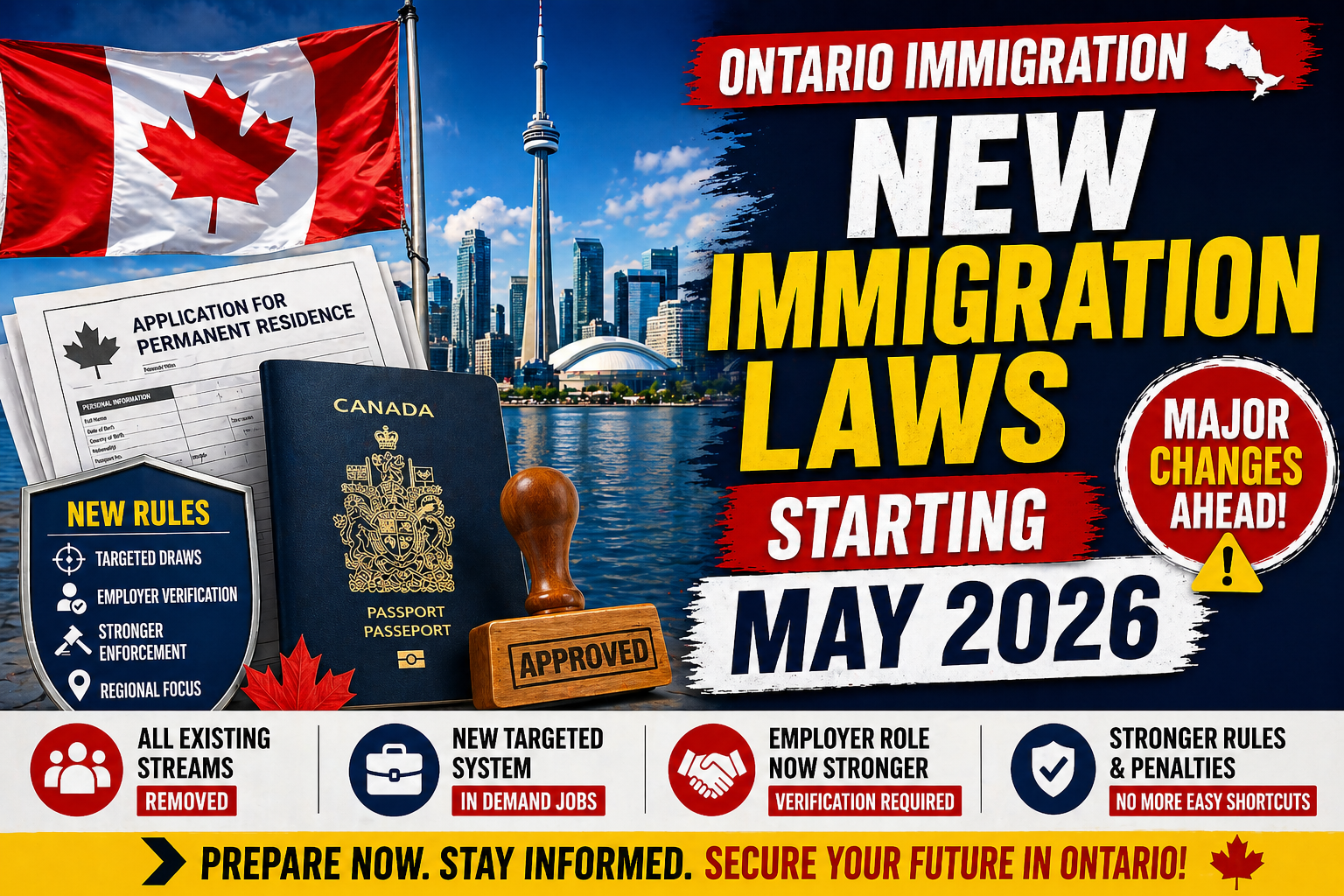
If you’re planning to immigrate to Ontario—or already in Canada on a work or study permit—this update is critical.
Starting May 30, 2026, Ontario is implementing one of the biggest immigration system overhauls in its history.
The changes affect the Ontario Immigrant Nominee Program (OINP)—a major pathway to permanent residence (PR).
These updates are expected to introduce stricter eligibility criteria, more targeted selection, and a stronger alignment with Ontario’s labor market needs. Applicants may see changes in how invitations are issued, with increased emphasis on specific occupations, skills, and regional demands. For many candidates, this means that simply meeting the minimum requirements may no longer be enough.
Understanding how these changes impact your profile is essential. Whether you are a student, temporary worker, or overseas applicant, adapting your strategy early can significantly improve your chances of receiving a provincial nomination and moving forward toward permanent residency.
What’s Changing (Big Picture)
Ontario is moving from:
Fixed immigration streams
To
A flexible, targeted selection system
In simple terms:
The old system is being completely replaced.
All Existing OINP Streams Will Be Removed
This is the biggest headline.
Ontario will revoke all current immigration streams by May 30, 2026
Streams Being Eliminated Include:
- Foreign Worker stream
- International Student stream
- In-Demand Skills stream
- Master’s Graduate stream
- PhD Graduate stream
- Human Capital stream
- Skilled Trades stream
- French-Speaking Skilled Worker
- Entrepreneur stream
That’s 9 major pathways completely removed
Why This Matters
If you were planning to apply under these:
Your pathway may no longer exist after May 30.
New System: Targeted Draws
Ontario is introducing a targeted immigration system.
What Are Targeted Draws?
Instead of general selection:
Ontario will invite candidates based on:
- Specific job roles
- Industry demand
- Skills shortages
- Regional needs
Example:
- Healthcare workers
- Skilled trades
- Tech professionals
This aligns immigration with real labor market needs
New Immigration Streams Coming
Ontario hasn’t fully revealed all new streams yet…
BUT:
The government now has the power to:
- Create new streams anytime
- Remove streams anytime
Why This Is Huge
Previously:
Fixed programs
Predictable rules
Now:
Dynamic system
Changing rules
More control by government
This makes immigration:
More strategic—but less predictable
You May Also Like: Indian Student Found Dead in Barrie Park: What Happened....
Employer Verification Becomes Mandatory
One of the biggest changes:
Stronger employer involvement
New Rules:
- Job offers must be verified
- Employers must meet stricter requirements
- Fraud prevention measures increased
This ensures:
Genuine job offers
Real economic contribution
Stronger Enforcement & Penalties
Ontario is tightening the system.
New enforcement includes:
- Misrepresentation penalties
- Administrative fines
- Faster refusal decisions
Authorities can now issue penalties under:
- Standards violations
- False information submissions
Important Change
Refusal notices can be sent by email and are considered delivered—even if you don’t read them
Meaning:
You can’t miss important updates anymore
Why Ontario Is Making These Changes
1. Labor Shortages
Ontario needs workers in:
- Healthcare
- Construction
- Education
- Skilled trades
Immigration must match demand.
2. Too Many Applications
The old system:
- Received massive applications
- Created backlogs
New system filters candidates better.
3. Economic Focus
Ontario wants:
Productive immigrants
Skilled workforce
Regional growth
You May Also Like: Indian Girl Found Dead in Brampton Basement: What We Know So Far.....
Focus on Regional Immigration
Ontario is shifting focus:
Less focus on Toronto
More focus on smaller regions
Programs like REDI (regional pilot) already show this trend
Expect:
More invitations outside GTA
Incentives for smaller cities
Impact on Students
Before:
- Easy pathway through graduate streams
Now:
Graduate streams removed
More job-based selection
Students must now:
Secure job offers
Align with in-demand sectors
Impact on Workers
Good News:
More targeted opportunities
Higher chances in priority jobs
Bad News:
Harder without in-demand skills
More competition
Impact on Employers
New Responsibilities:
- Verify job offers
- Participate in process
- Meet compliance rules
Employers play a bigger role than ever.
Biggest Risks for Applicants
Waiting too long
Old streams disappear
Not aligning with job market
No invitations
Submitting weak applications
Faster rejection
Smart Strategy for 2026
Apply before May 30 (if eligible)
Focus on in-demand jobs
Improve your profile
- Language score
- Work experience
- Job offer
Stay updated constantly
Immigration is now strategy-based
What Happens After May 2026?
Expect:
New streams announced
Frequent targeted draws
Changing eligibility
Similar to Express Entry category draws.
You May Also Like: PR Processing Time in April 2026...
Final Truth About Ontario Immigration 2026
This is not a small update.
It’s a complete system reset.
The way candidates are selected, evaluated, and invited is changing at a fundamental level. Ontario is moving toward a more targeted and data-driven approach, where only those who closely match labor market needs will stand out. This means that generic profiles may struggle, while specialized and well-prepared applicants will gain a clear advantage.
For anyone serious about immigrating, this shift should be taken seriously. It is no longer just about eligibility—it is about positioning yourself correctly within the system. Understanding these changes early and adjusting your strategy can be the difference between waiting indefinitely and receiving a nomination at the right time.
Key Takeaways:
All old streams gone
New targeted system
Strong employer role
Tougher rules
Final Thoughts
Ontario’s new immigration laws starting May 2026 mark a major shift in how Canada selects immigrants.
It’s no longer about:
- Just meeting requirements
It’s now about:
- Matching the economy
- Having the right job
- Being strategically positioned
If you want PR in Ontario:
Start planning NOW—not later.
Stay ahead of immigration changes—because in 2026, those who adapt fastest will win.
These changes reflect a broader trend across Canada’s immigration system, where provinces are taking a more active role in selecting candidates who can immediately contribute to local workforce demands. This means that applicants must pay closer attention to which industries are growing and where labor shortages exist. Simply having a degree or general experience may not be enough if it does not align with current economic priorities.
For international students and temporary workers already in Ontario, this is a crucial time to reassess your pathway. Choosing the right job, gaining relevant experience, and maintaining a strong profile can significantly increase your chances of being selected. Employers are also playing a bigger role, so securing stable employment in an in-demand field can make a major difference.
Ultimately, success will depend on preparation, awareness, and timing. Those who take action early, build the right skills, and stay informed about policy updates will be in the strongest position to benefit from these new immigration opportunities.
Discover more from CanadianUpdates
Subscribe to get the latest posts sent to your email.