
Introduction
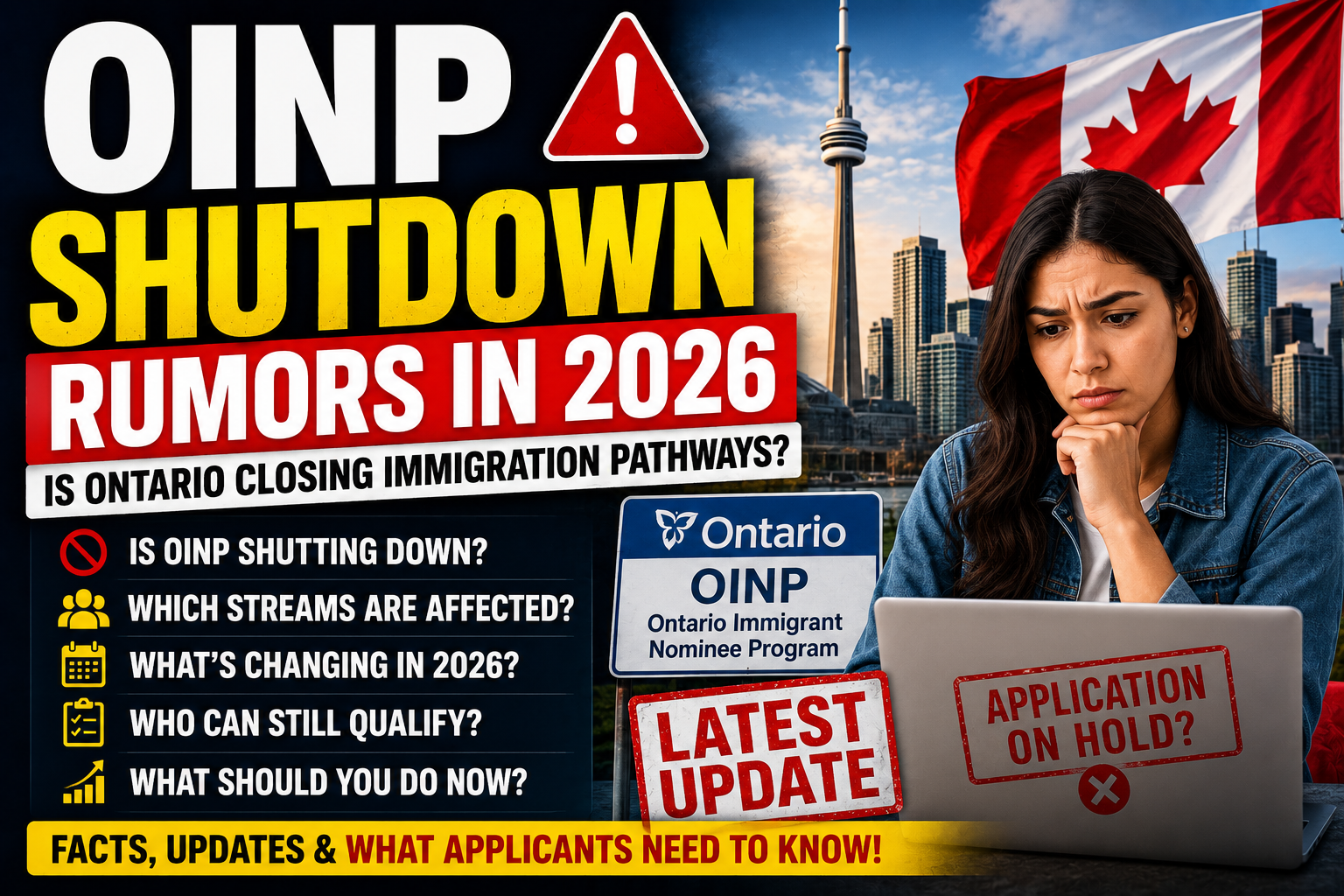
Rumors about an “OINP shutdown” are spreading rapidly online in 2026, creating panic among international students, temporary workers, and immigrants planning permanent residence in Ontario.
Across social media platforms, Reddit discussions, immigration forums, and YouTube videos, many people are asking the same question:
Is Ontario shutting down the Ontario Immigrant Nominee Program (OINP)?
The short answer is:
No, Ontario has not officially shut down the OINP.
However, the situation is more complicated than many people realize.
Ontario’s immigration system is going through one of the biggest transformations in recent years. Processing delays, paused streams, stricter selection rules, quota limitations, and changing labour market priorities are creating the impression that the program is becoming harder to access.
For many applicants, it may feel like a shutdown—even if the system technically remains active.
This article explains:
- Why OINP shutdown rumors started
- Which streams are affected
- What changes are happening in 2026
- Who may still qualify
- What applicants should do next
What Is the OINP?
The Ontario Immigrant Nominee Program (OINP) is Ontario’s provincial immigration system.
It allows Ontario to nominate immigrants for permanent residence based on:
- Work experience
- Education
- Job offers
- Skills needed in the labour market
The OINP is one of the most popular PR pathways in Canada because Ontario attracts:
- International students
- Skilled workers
- Tech professionals
- Healthcare workers
- New immigrants
Many applicants choose Ontario because it offers strong job opportunities and large immigrant communities.
Why Are People Talking About an “OINP Shutdown”?
The rumors began because many applicants noticed major disruptions in 2026.
These include:
- Reduced invitations in some streams
- Longer processing times
- Sudden pauses in draws
- Increased competition
- Stricter eligibility requirements
For some people waiting months without updates, it appears the program has “stopped.”
However, most of these issues are linked to policy changes—not a full shutdown.
Ontario’s Immigration System Is Changing
Ontario is shifting toward a more targeted immigration system.
Instead of accepting large numbers of applicants broadly, the province is focusing more on:
- Labour shortages
- Economic priorities
- Regional needs
- High-demand occupations
This means Ontario is becoming more selective.
As discussed in recent Ontario immigration law updates for 2026, the province now wants immigration programs to align more directly with economic needs.
Which OINP Streams Are Most Affected?
Not all streams are being affected equally.
Some pathways remain active, while others are becoming more competitive or unpredictable.
1. International Student Stream
This stream has become much harder in 2026.
Reasons include:
- Oversupply of applicants
- Housing concerns
- Increased scrutiny of private colleges
- Competition for nominations
Many students who expected easy PR pathways are now facing uncertainty.
This is one reason many applicants are researching the fastest provinces for PR in Canada right now instead of relying only on Ontario.
2. Employer Job Offer Stream
This stream still exists, but requirements are becoming stricter.
Ontario is now focusing more on:
- Genuine labour shortages
- Employer legitimacy
- High-demand occupations
Applicants with weak job offers or questionable employment arrangements face higher risks of refusal.
3. Human Capital Priorities Stream
This stream remains one of the strongest pathways.
However:
- CRS score requirements fluctuate heavily
- Invitations are highly competitive
- Selection is increasingly targeted
Ontario is now prioritizing sectors such as:
- Healthcare
- Technology
- Skilled trades
4. Masters Graduate Stream
This stream continues attracting huge demand.
In 2026:
- Spots fill extremely quickly
- Competition is intense
- Technical system issues remain common during openings
Applicants often wait months for opportunities to apply.
Is Ontario Reducing Immigration Targets?
Ontario still supports immigration overall.
However, Canada’s broader immigration strategy is changing.
The federal government has announced plans to reduce the proportion of temporary residents in Canada over the next few years.
This affects:
- International students
- Temporary foreign workers
- Post-graduate work permit holders
As a result, provinces like Ontario are under pressure to become more selective.
Housing Crisis Is Influencing Immigration Policy
One of the biggest reasons for immigration changes in Ontario is housing.
Ontario continues facing:
- Extremely high rent prices
- Housing shortages
- Population growth pressure
Governments are increasingly linking immigration levels to housing availability.
This is especially important in cities like:
- Toronto
- Mississauga
- Brampton
- Ottawa
Because of this, Ontario may prioritize applicants willing to work in smaller communities.
OINP Processing Delays in 2026
Many applicants are frustrated with processing delays.
Common complaints include:
- Applications remaining “submitted” for months
- Delayed nomination decisions
- Slow employer verification
- Limited communication
Some applicants interpret these delays as a shutdown, but in most cases the system is still operating.
The delays are mainly caused by:
- High application volume
- Increased screening
- Program restructuring
Why Ontario Is Becoming More Selective
Ontario wants immigration programs to address specific economic needs.
This means the province now values:
- High-demand occupations
- Skilled workers
- Strong employment history
- Regional labour needs
The era of broad, easy immigration pathways is gradually disappearing.
As discussed in recent TR to PR pathway updates in Canada, immigration success in 2026 increasingly depends on strategy and preparation.
You May Also Like: New TR to PR Update in Canada 2026: Everything You Need to Know
Which Occupations Are Still Strong for OINP?
Applicants in certain sectors still have strong opportunities.
High-Demand Fields Include
- Healthcare
- Nursing
- Skilled trades
- Technology
- Construction
- Transportation
These industries continue facing worker shortages.
What Happens If OINP Pauses a Stream?
Ontario sometimes pauses streams temporarily.
This does not necessarily mean permanent closure.
Possible reasons include:
- Reaching quota limits
- System updates
- Policy changes
- Managing application backlogs
Streams may reopen later with new criteria.
Is Ontario Still Good for PR?
Ontario remains one of Canada’s top immigration destinations.
However, PR is no longer as easy as it once seemed.
Applicants now need:
- Strong profiles
- Good work experience
- Strategic planning
- Competitive CRS scores
Some applicants are also exploring:
- Alberta
- Saskatchewan
- Manitoba
- Atlantic Canada
because these provinces may offer less competition.
You May Also Like: New LMIA Rules in Canada 2026: Major Changes
What Applicants Should Do Right Now
If you are planning Ontario PR, do not panic—but do prepare carefully.
1. Keep Your Status Valid
This is critical.
Do not allow:
- Study permits
- Work permits
- Visitor status
to expire.
2. Improve Your CRS Score
Higher scores provide more opportunities.
Ways to improve:
- Language scores
- Work experience
- Education
- French language ability
3. Explore Multiple Pathways
Do not rely only on OINP.
Also consider:
- Express Entry
- Federal programs
- Rural immigration pathways
- Other provinces
Tracking latest Express Entry draw results in Canada is especially important in 2026.
4. Focus on High-Demand Occupations
Healthcare, trades, and tech continue receiving priority attention.
5. Stay Updated
Immigration rules are changing rapidly.
Avoid relying on rumors or viral posts.
OINP Rumors and Social Media Panic
A major issue in 2026 is misinformation.
Many viral videos and posts exaggerate immigration changes to attract attention.
Common misleading claims include:
- “Ontario stopped all PR”
- “OINP is completely closed”
- “No one can get PR anymore”
These statements are often inaccurate.
The system is changing—but not disappearing.
Could OINP Become Harder in the Future?
Yes.
Experts believe Ontario immigration will likely become:
- More targeted
- More occupation-specific
- More competitive
Future selection may increasingly prioritize:
- Economic contribution
- Regional labour shortages
- Skilled professions
What International Students Need to Understand
Many students entered Canada expecting a direct path to PR.
In 2026, reality is different.
Students now face:
- Increased competition
- Stricter rules
- Limited nomination spots
This is why planning early is critical.
Students should focus on:
- Strong work experience
- Networking
- High-demand careers
- Language improvement
You May Also Like: Full List of CRA Benefits International Students Can Get in Canada (2026 Guide)
Final Thoughts
The OINP is not officially shut down in 2026—but the system is clearly becoming more selective and competitive.
For many applicants, the changes feel dramatic because Ontario is moving away from broad immigration access toward a more targeted, economically driven model.
The key reality is this:
Ontario still wants immigrants—but only those who match its economic priorities.
Success in 2026 depends on:
- Preparation
- Strategy
- Strong profiles
- Adaptability
The people most likely to succeed are those who stay informed, improve their qualifications, and remain flexible about pathways and locations.
Immigration to Ontario is still possible—but it is no longer something applicants should take for granted.
Discover more from CanadianUpdates
Subscribe to get the latest posts sent to your email.