
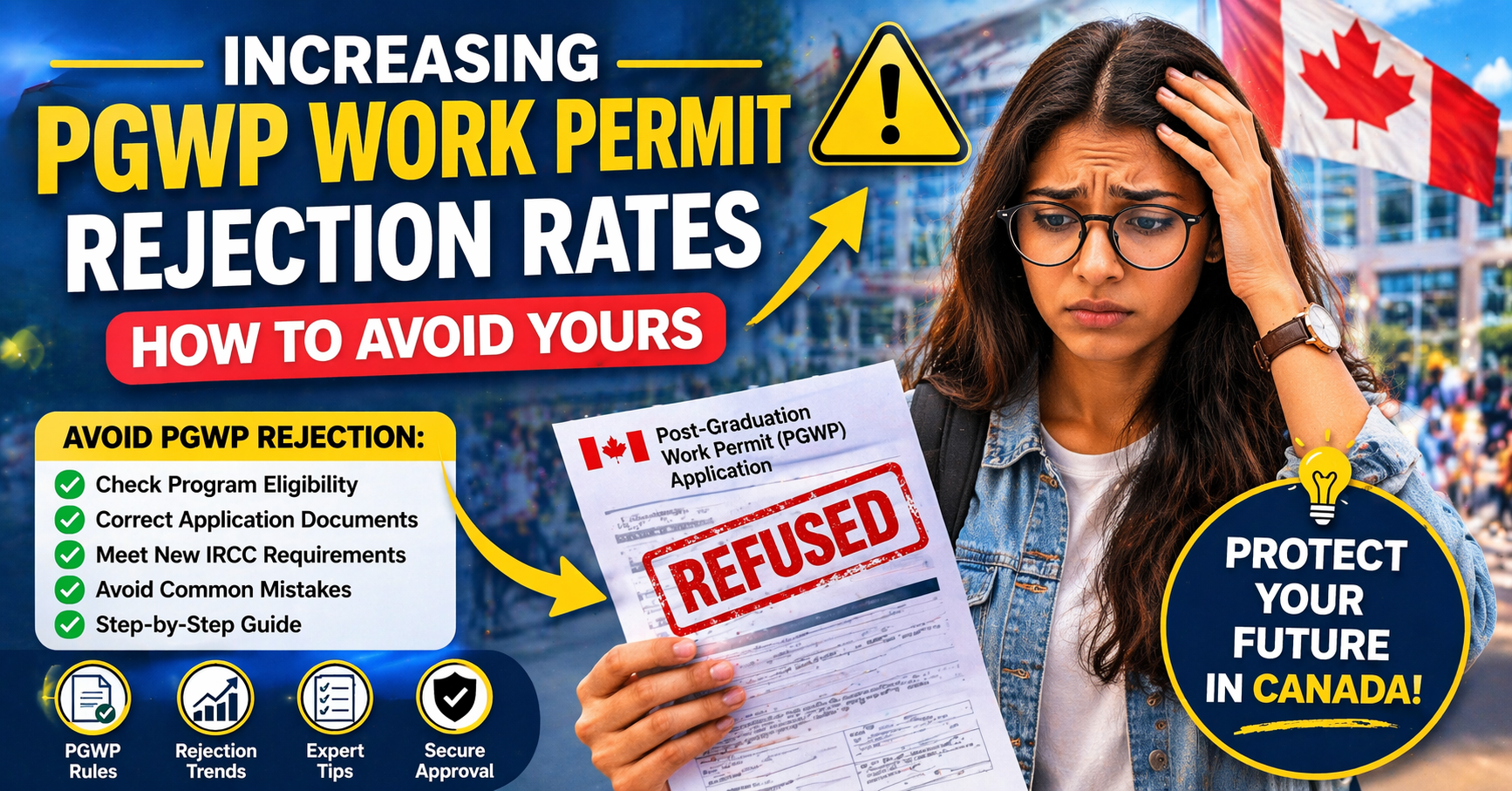
International students in Canada have long relied on the Post-Graduation Work Permit (PGWP) as their pathway to gaining Canadian work experience and eventually permanent residency. But recently, something has changed.
More graduates are getting PGWP refusals — and many don’t understand why.
If you’ve seen a “REFUSED” stamp on your application (or want to avoid it), this guide breaks down everything you need to know — with real data, reasons, and step-by-step solutions.
PGWP Refusal Rates Are Rising (2024–2026)
Recent data shows a noticeable shift:
- PGWP approval rate dropped from 98% in 2024 to ~96% in 2025
- Refusal rates doubled from ~2% to ~4%
- Total PGWP approvals expected to drop by ~30% in 2025
That might not sound huge at first — but in real numbers, that means thousands more students are being rejected every year.
Even more concerning:
- Processing delays are increasing
- New rules are stricter
- Small mistakes now lead to automatic refusals
Bottom line: PGWP is no longer “almost guaranteed”
Why Are PGWP Applications Getting Rejected More?
The rise in refusals is not random — it’s driven by major immigration rule changes.
1. New Language Test Requirement (Since Nov 2024)
Applicants must now provide:
- IELTS / CELPIP (English)
- TEF (French)
Minimum levels:
- CLB 7 (University graduates)
- CLB 5 (College graduates)
Many students were refused simply because:
- They didn’t know this rule existed
- They didn’t upload scores properly
2. Field-of-Study Restrictions
Not all programs qualify anymore.
Canada now prioritizes:
- Healthcare
- Skilled trades
- STEM fields
- High-demand occupations
If your program is NOT on the approved list → automatic refusal
3. Strict Full-Time Study Requirement
You must:
- Study full-time every semester
- Except possibly your final term
Common mistakes:
- Taking a part-time semester
- Taking a break without approval
Even ONE violation can ruin eligibility
4. 180-Day Application Deadline
You must apply within:
180 days after graduation
Problems students face:
- Waiting too long
- Not receiving documents on time
- Misunderstanding the deadline
If you miss it → No PGWP
5. Increased IRCC Scrutiny
IRCC officers are now:
- Checking documents more carefully
- Rejecting incomplete applications instantly
- Enforcing rules more strictly than before
Top Reasons PGWP Gets Refused (Real Cases)
Here are the most common rejection reasons:
1. Missing Documents
This is the #1 reason.
Examples:
- No transcript
- Missing completion letter
- Passport expired
- Language test not uploaded
Even one missing file = rejection
2. Ineligible Program or College
If your school or course is not approved:
- Private college (PPP programs)
- Short programs (<8 months)
- Non-eligible field of study
You will NOT qualify
3. Applied Too Late
- After 180 days → rejected
- After study permit expired → rejected
4. Part-Time Study Violation
- Took fewer courses
- Dropped semester
- No proof of authorized leave
5. Immigration Status Issues
- Worked more hours than allowed
- Stayed without valid status
- Broke visa rules
Real Impact: Why This Matters
A PGWP refusal doesn’t just mean losing a work permit.
It can affect:
- Your PR pathway
- Your Canadian job opportunities
- Your immigration history
In many cases, students:
- Have to leave Canada
- Lose job offers
- Restart immigration process
How to Avoid PGWP Refusal (Step-by-Step)
Follow this checklist carefully:
Step 1: Confirm Eligibility
Before applying:
- Check your school is a DLI (Designated Learning Institution)
- Confirm your program is PGWP-eligible
Step 2: Stay Full-Time
- Maintain full-time status every semester
- Keep proof if you take a break
Step 3: Prepare Documents Early
You need:
- Completion letter
- Official transcripts
- Valid passport
- Language test results
Step 4: Track Your Deadline
- Apply within 180 days
- Don’t wait till last minute
Step 5: Double-Check Application
Before submitting:
- Review all uploads
- Check file clarity
- Ensure nothing is missing
Step 6: Upload Language Test Properly
Important tip:
- Upload under “Client Information” if no field is shown
Step 7: Apply Early
Best practice:
Apply within 30–60 days after graduation
Step 8: Get Expert Review (Optional)
If unsure:
- Hire RCIC or immigration consultant
- Avoid costly mistakes
PGWP Timeline Example
Here’s a safe timeline:
- Graduation → June 1
- Documents ready → June 15
- Apply → July 1
- Decision → 4–6 months later
Applying early = safer
What To Do If Your PGWP Is Refused
Don’t panic — you still have options.
1. Read Refusal Letter Carefully
Understand:
- Exact reason for rejection
2. Request GCMS Notes
These show:
- Officer’s detailed reasoning
3. Submit Reconsideration Request
You can:
- Contact IRCC via webform
- Explain mistake
- Provide missing documents
4. Restore Status (If Expired)
If your permit expired:
- Apply for restoration within 90 days
- Then reapply
5. Reapply Correctly
Fix:
- Missing documents
- Eligibility issues
- Timing errors
6. Judicial Review (Advanced Option)
If refusal is unfair:
- File case in Federal Court
- Must act within 15 days
Future Outlook: Will PGWP Get Harder?
Yes — likely.
Canada is:
- Reducing immigration intake
- Tightening study permit rules
- Focusing on skilled workers
Expect:
- More refusals
- Stricter eligibility
- Higher competition
Pro Tips Most Students Don’t Know
- Apply BEFORE your study permit expires
- Keep digital + printed documents
- Don’t rely only on agents
- Always verify IRCC updates
- Track your eligibility from Day 1
Final Checklist (Save This)
Before applying, confirm:
✔️ Program is eligible
✔️ You studied full-time
✔️ Documents are complete
✔️ Language test included
✔️ Applied within 180 days
✔️ Passport is valid
✔️ No immigration violations
Final Thoughts
The PGWP is still one of the best opportunities in Canada — but it’s no longer automatic.
A small mistake can:
- Delay your future
- Cost you thousands
- Force you out of Canada
But with the right preparation, you can avoid refusal completely.
Be proactive, not reactive.