
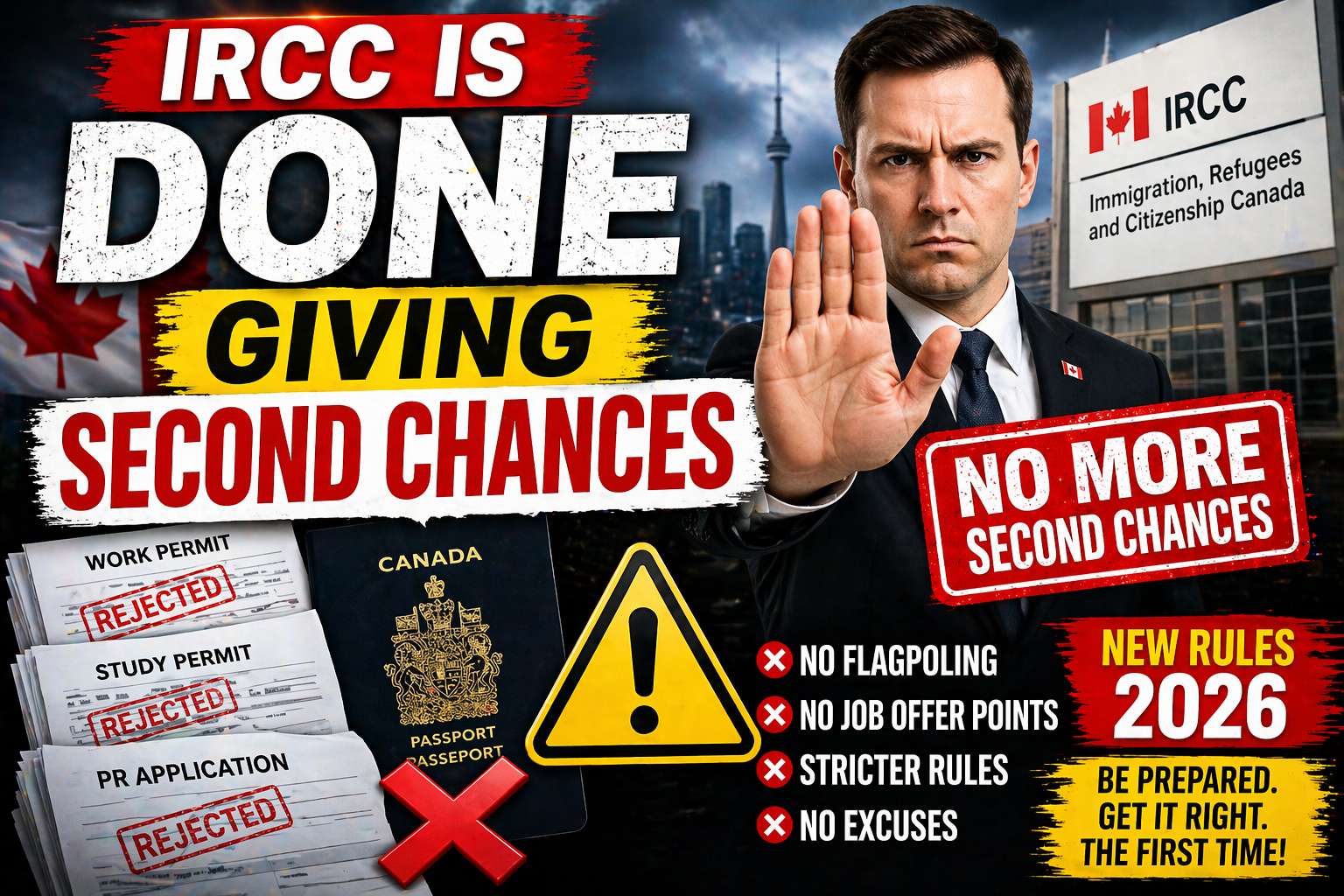
Canada’s immigration system has changed — and not in a small way.
If you’ve been following recent updates, one message is becoming crystal clear:
IRCC is no longer giving second chances.
For years, applicants could fix mistakes, reapply, or rely on “buffer systems” like maintained status. But today, Immigration, Refugees and Citizenship Canada (IRCC) is tightening rules across the board — and the consequences of even small errors are now serious.
In this in-depth guide, we’ll break down exactly what “no second chances” means, who it affects, and how you can protect your immigration journey.
What Does “No Second Chances” Actually Mean?
The phrase isn’t just a headline — it reflects real policy shifts.
IRCC has moved toward a strict, one-attempt system, where:
- Mistakes are not forgiven
- Incomplete applications are rejected (not fixed)
- Second applications often don’t protect your status
- Border shortcuts are gone
- Program eligibility is tighter
In simple terms:
If you mess up your application, you may lose your chance entirely.
According to updated IRCC policy guidance, if your first extension is refused, submitting another one will not save your legal status anymore .
The Biggest Changes Behind This Shift
1. No More Safety Net for Multiple Applications
Before:
- You could submit a second application if the first was refused
- You could often stay in Canada while waiting
Now:
- If your first application is refused → your status ends
- A second application does NOT protect you anymore
Result: You can fall out of status immediately
2. Flagpoling Is Basically Dead
For years, people used a trick called flagpoling:
- Exit Canada briefly
- Re-enter and get a new permit at the border
Now:
- IRCC has banned most permit processing at the border
- You must apply online and wait
No more quick fixes or shortcuts
3. Express Entry Got Harder
A major change:
- Job offers no longer give CRS points
Before:
- You could boost your score easily
Now:
- You must rely on:
- Language
- Education
- Experience
No backup advantage anymore
4. Study Permits Are Much Tougher
Canada has reduced student intake and increased checks.
Now IRCC:
- Verifies every acceptance letter
- Checks proof of funds more strictly
- Limits number of permits
If anything looks off, your application is refused — no follow-up.
5. Spousal Open Work Permits Restricted
Before:
- Almost all students/workers could bring spouse with work permit
Now:
- Only certain programs and high-skill jobs qualify
Many families lose eligibility completely
6. Parents Sponsorship Closed (2026)
IRCC has paused:
- Parent & Grandparent PR program
No new applications accepted in 2026
Families now:
- Must wait
- Or use Super Visa
7. Incomplete Applications = Immediate Return
This is one of the most dangerous changes.
Before:
- IRCC might ask for missing documents
Now:
- Your application is returned
- You must reapply from scratch
You lose time, status, and sometimes eligibility
Who Is Most Affected?
International Students
Students are hit the hardest:
- Higher refusal rates
- Strict financial proof
- Limited permits
- No flexibility on errors
Even switching schools now requires a new permit.
One mistake = possible rejection + loss of status
Temporary Workers
Workers face:
- No border renewals
- Stricter permit rules
- Limited spouse eligibility
If your permit expires or gets refused:
You may have to leave Canada
PR Applicants
Permanent residence is still possible — but harder:
- No job offer advantage
- More documentation upfront
- No corrections after submission
Your application must be perfect from day one
Families & Sponsors
- Parent sponsorship paused
- Spousal sponsorship stricter
Less opportunity, longer wait times
Why Is IRCC Doing This?
There are 3 main reasons:
1. System Overload
Canada had record immigration numbers:
- Too many applications
- Long processing delays
2. Fraud Prevention
IRCC is targeting:
- Fake job offers
- Fake student admissions
- Misrepresentation
3. Controlled Immigration Targets
Canada is now:
- Reducing temporary residents
- Focusing on quality over quantity
Real Impact: What Happens If You Make a Mistake?
Let’s say:
- You submit a study permit with missing funds proof
- OR your work permit extension gets refused
Now:
You don’t get a second review
You don’t stay in status
You must fix everything and reapply
Sometimes from outside Canada
What You MUST Do Now (Critical Strategy)
1. Treat Your Application Like a Legal Case
- Double-check every document
- Use correct formats
- Follow checklist exactly
Don’t “hope it works” — make it bulletproof
2. Apply Early — Not Last Minute
- Don’t wait until expiry
- Give buffer time
Late applications = high risk
3. Avoid DIY Mistakes (If You’re Unsure)
If your case is complex:
- Consider a licensed consultant or lawyer
One mistake can cost months or years
4. Always Have a Backup Plan
Ask yourself:
- What if this gets refused?
- Can I restore status?
- Can I reapply from outside Canada?
Plan before applying
5. Understand Restoration Rules
If you lose status:
- You have 90 days to apply for restoration
After that:
You must leave Canada
The New Reality: Immigration Is No Longer Forgiving
Canada is still welcoming immigrants — but:
It is no longer flexible
It is no longer forgiving
It is no longer giving second chances
This is a system shift, not a temporary change.
Final Thoughts
The phrase “IRCC is done giving second chances” is not fear-mongering — it’s reality.
Today’s system rewards:
Precision
Preparation
Strong documentation
And punishes:
Carelessness
Incomplete applications
Last-minute decisions
Bottom Line
If you’re planning to:
- Study in Canada
- Work in Canada
- Apply for PR
- Sponsor family
You must get it right the first time.
Because now:
There may not be a second chance.